

AI can build a dbt model in 10 seconds.
It can even throw a whole project together in 10 minutes. Unraveling the mess it made when it goes unchecked can take 10 weeks.
Unless you’ve lived under a rock for the last 3 years, it’s obvious that AI is flipping the script on how data teams operate. Now that we’ve seen how good at coding AI is, data leaders are continuously raising the bar for how fast their teams should ship. Speed has now become a non-negotiable for developers, rather than a bonus.
The 2026 State of Analytics Engineering Report from dbt Labs states that “There’s a real tension between moving fast and building trust — and you can’t optimize for both without intention.” Typically, speed and innovation vs trust and reliability are at sort of a tug-of-war between each other. When we optimize for one, the other falters. However, in the world of data, trust is everything. The entire point of collecting and using our data in the first place is to be able to make decisions that we know are rooted in factual evidence.
AI has made writing code no longer the bottleneck. That’s the easy part now. Speed is abundant, and trust and reliability are scarce. And now that AI can do the fun part, we often forget about the boring stuff and just assume the output is correct. With how much we’ve allowed our brains to atrophy from letting AI do all of our thinking for us, it’s easy to just assume that the outputs are exactly what we wanted. Who has time to check all the changed lines in those 6 files anyway? We’ve gotten to a point where we’re even lazy on how we prompt and just hope that our friend Claude knows what we mean when we tell him “this is wrong” or “fix this”. Without appropriate governance and documentation in place to provide context, Claude just uses the average of everything he’s seen to guess what you meant.
AI knows code. It only knows your business if you tell it.
Here’s what that looks like in practice:
- AI can’t set your organization’s standards. It can’t decide if revenue is counted after the deal closes, after the invoice is paid, or after the service is delivered. And if it decides for you, it can’t convince the organization that it really has the REAL definition of revenue. That’s a business decision, and someone in the organization has to decide, everyone else has to agree, and it has to be written down and documented.
- AI can’t be the data owner. It can debug the pipeline, check the logs, and even explain to the CFO why churn spiked 500% on Tuesday then went back to normal, but it can’t reassure them that it won’t happen again, and it can’t earn trust and buy-in from the organization. Reliability is a commitment the data owner makes, by setting checks & balances, alerting, and documentation so that their trusty AI partner can do its thing.
- AI can’t decide what matters. Ask AI for a dashboard and you’ll get one. Ask it for 10 and you’ll get 10. It can’t tell you which information your business actually cares about, or what would be best for leadership to check every Monday morning. That takes someone who understands the strategy and knows the business.
- AI can’t say no. A good data owner pushes back, and asks “Why do we need this?” They balance priorities, and don’t push something that could be unreliable just because it’s due Friday. AI does the opposite. It builds exactly what you ask, with extreme speed, and extreme confidence. The answer might be right, but the question was wrong. Sometimes, the most valuable thing on a data team is the person willing to say, “We shouldn’t build that yet.”
So what does that mean for your team?
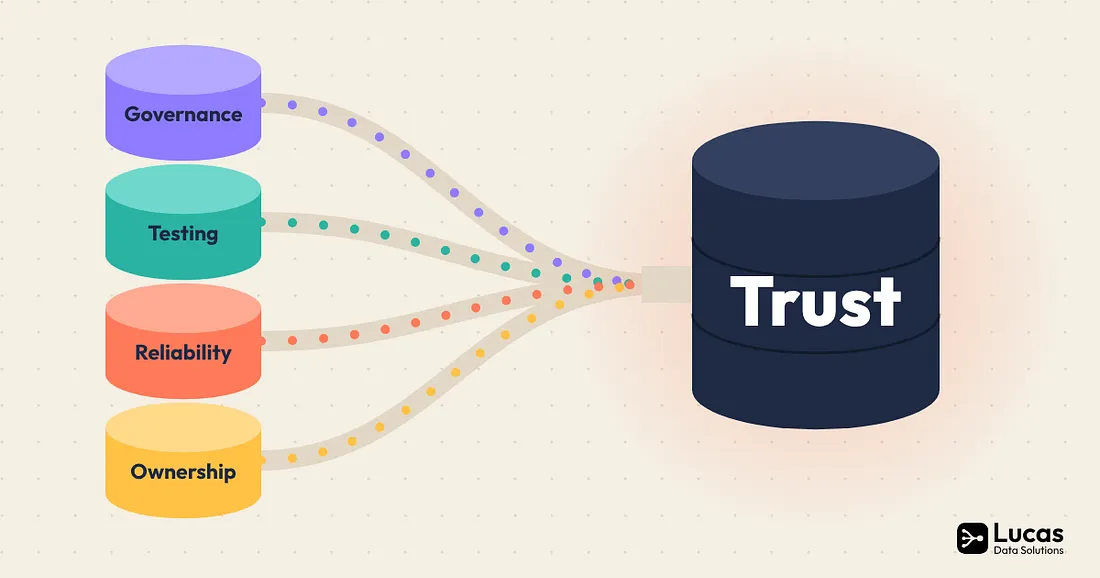
AI amplifies whatever foundation you already have. If you have strong data governance, testing, and reliability, AI makes you faster. If not, it helps you make a mess faster. You can start with something as simple as these steps:
- Identify your 5 most important business metrics and document their agreed definition.
- Put simple testing on your 5 most important data models. Unique keys, not-null, additional business rules as needed.
- Identify an owner for every data domain. Marketing, sales, finance, HR, etc.
Do that, and AI goes from guessing to knowing. That’s when the speed actually pays off.
dbt Labs. (2026). 2026 State of Analytics Engineering Report.